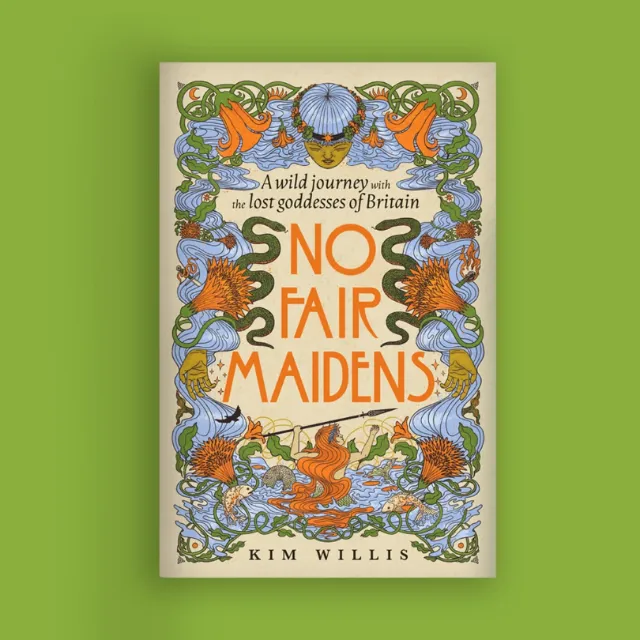
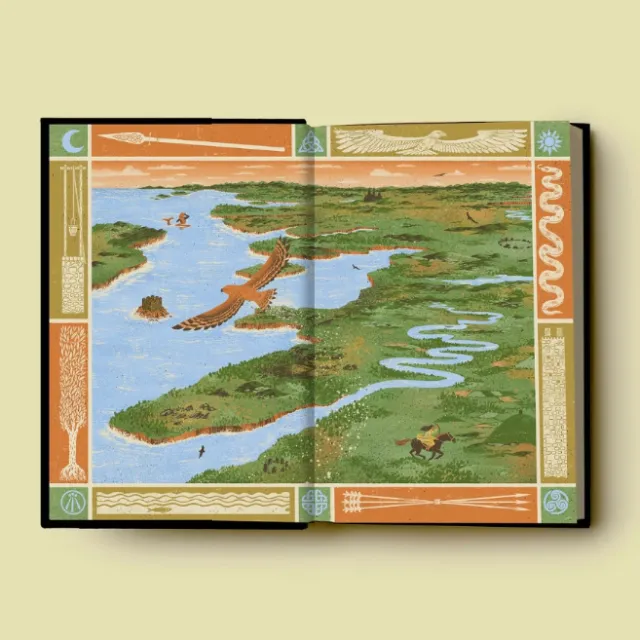
What led you to become an illustrator? Well, professionally speaking, I was working as a graphic designer and would create the occasional illustration whenever a project called for it. But what gradually pulled me more toward illustration was a period when I was part of an artists’ collective called BASE~V. We produced a digital PDF magazine featuring artwork by various artists , I worked as an editor and also contributed illustrations. I was then invited to illustrate a special feature about a music festival that had taken place in São Paulo (2005), and after that I more or less never stopped illustrating. By 2008, illustration had become my full-time profession, and it has been ever since.Did you study illustration in college? In Brazil, illustration isn’t offered as a college degree. So I have a degree in Visual Arts from the Institute of Arts at UNESP (São Paulo State University).Where did you grow up? I was born in São Paulo, but I grew up in Guarulhos, one of the cities in the São Paulo metropolitan area.Do you have a childhood memory relating to art that you hold dear? I have one that really changed everything for me. When I was nine, I had a teacher whose method was basically having us copy the textbook into our notebooks. One day, during one of those boring copying exercises, I decided to copy the illustrations too. It was a lesson about animals. That moment completely changed how I saw illustration, and after that I started observing the world around me much more closely so I could draw it.Can you remember when you first saw art used in a commercial context?I began to understand art as a profession when I watched a documentary or a report about animation, back when it was still drawn entirely by hand.Where do you live now and what drew you there? I still live in São Paulo. I like being here because there are concerts and exhibitions, and I enjoy being able to do things on foot.Describe your studio for us I work from my apartment, and my studio space is used both for illustration and for screen printing. I really love printmaking processes. It’s a room with a desk set up for all my digital work, including my laptop, monitor, scanner, and printer. Behind that, I have a drawing board, a drying rack, a printing table, and shelves with inks and books. There’s also a small separate room where I prepare my screen printing frames and make stamps.Who or What is your biggest inspiration? I’m very inspired by vintage printed materials, especially from the early 20th century, for their creativity in using limited color palettes and screenprinted gig posters. In terms of artists, I really admire the work of Harry Clarke, J. Carlos, Gilvan Samico, Júlia Sardà, and Sophy Hollington.If you could collaborate with another artist or creative of any genre, living or dead, who would it be?In a hypothetical parallel world, I’d love to collaborate with Frank Zappa, but since he’s no longer with us, why not Angine Poitrine?What’s your favourite way to spend a day off?Doing nothing, really, nothing at all!! I think it’s important to allow yourself that kind of physical and mental reset. Then I like to listen to music, both familiar and new, and watch something without overthinking it.What's your most prized possession and why?I can’t really choose just one. The things I value most are my books, records, and the tools and materials I use. I guess I get attached to all of them.What causes are you passionate about?Digital security and class-related issues, as well as the consumption of real, unprocessed food.Do you adopt any environmental habits to be more sustainable?I try to reduce my meat consumption and cut down on plastic use, which, in urban environments, often feels almost impossible.Do you collect anything? Yeah! I collect (or try to!) vinyl records and tarot decks. I just wish I had a bigger budget for it.What do you listen to when you work? It really depends on the stage of a project and my mood. Besides Frank Zappa and Black Sabbath, I listen a lot to stoner, doom, and sludge metal, but also other styles like funk and jazz, artists like Kashmere Stage Band and Art Blakey, as well as podcasts about music, politics, and food. I’m not much of a playlist person; I prefer listening to full albums. When I want something more random, I usually tune into the multiple WFMU.org radios.What's your favourite podcast?Medo e Delírio em Brasília (political topics explored in depth with a lot of humor, it makes you both angry and laugh at the same time).What is the first record you bought? I wish I had bought Arise by Sepultura, but I didn’t have enough money at the time, so I got Morbid Visions instead (their first album, which I still have to this day).Who is your art hero? David Lynch.Who is your design hero? Aloísio Magalhães.What is your favourite book?Macunaíma – Mario de Andrade.What is your favourite quote?“What's the Ugliest Part of Your Body? Some say your nose. Some say your toes. But I think it's your mind.” By Frank Zappa & Mothers of Invention.What movie can you watch over and over?Lost Highway by David Lynch. I watch it again and again and never fully understand it, but I love it.What is the last show you binged?Radioactive Emergency (Netflix).What was the last exhibition you saw and loved?“Monet's Ecology” by Claude Monet - MASP.What was the last concert you went to?Kadavar.If you could visit anywhere in the world, where would you go? Antarctica, or a salt desert, like the Uyuni Salt Flats in Bolivia.If you could only any eat one type of food for the rest of your life, what would it be?Bread. Preferably the softest, fluffiest kind.What was your favourite assignment ever?Alice in Wonderland and Alice’s Adventures Underground – Lewis Carrol, published by Jhambo Ink.If a client paid you enough money to take a year off and create whatever you want – an open brief - no constraints - what would you deliver?I would fully dive into a project I’ve been developing since 2015 called Fortuna. It starts with random journeys on Google Street View, capturing those distorted moments as you move through the streets, which I then reinterpret (landscapes, people, or objects ) using a three-color palette for screen printing or risograph. I’d create a series of small books/zines and posters, and possibly, if time allowed, an installation with projection and some generative elements in the same visual language.Is there a type of job you haven't done yet, but would love to do?Gig posters, especially if it’s for my favorite bands.Is there a work lesson you’ve had to learn the hard way?Working for free on projects for large companies that may never happen.How has your work or practice evolved over time?I think it’s evolved through staying open to experimentation and developing personal projects. Research and study (not just technically, but also training the eyes), have been essential in pushing my work forward.If you were not an illustrator, what would you be? Maybe a graphic designer, which I was at one point. In a parallel world, perhaps I’d be studying arthropods or myxomycetes.What is the most challenging part of being an illustrator?Recently, having to produce videos - it takes up a lot of my time.What’s the best advice you’ve ever been given? Pay attention to details, especially when working with print, where it really makes a difference.What career advice would you give your younger self?Learn how to make videos, and be less of a perfectionist, especially because there will come a time when people will always ask for video content.Do you have any advice for other illustrators?Have personal projects, that’s where your voice, aesthetic, ideas, and way of thinking are truly free, and they can help guide your career. I’ve done this myself, and I keep doing it to try to keep my mind fresh. Keep in mind: if a client sees dogs in your portfolio, you likely won’t be hired to draw cats.