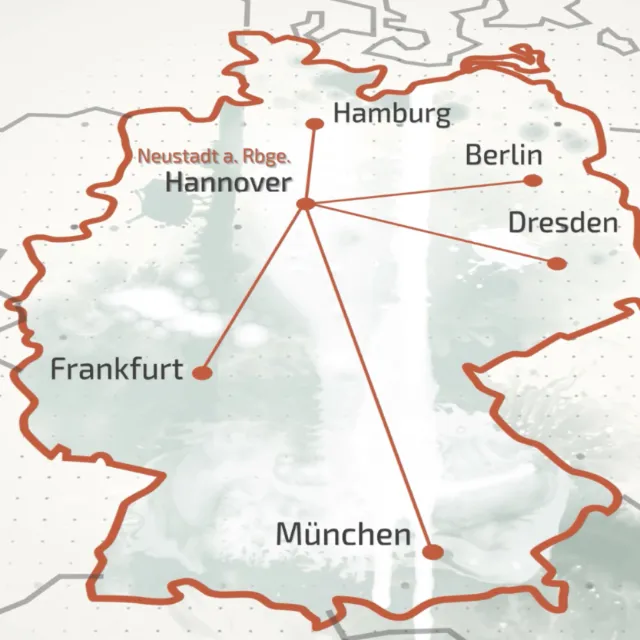
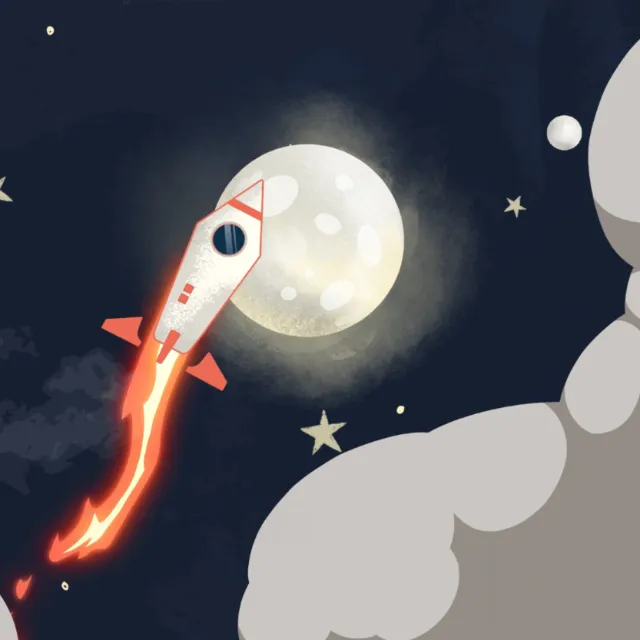
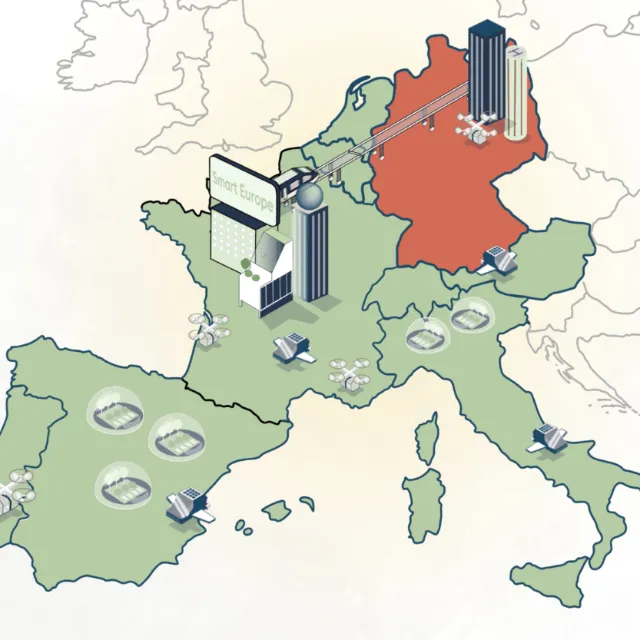
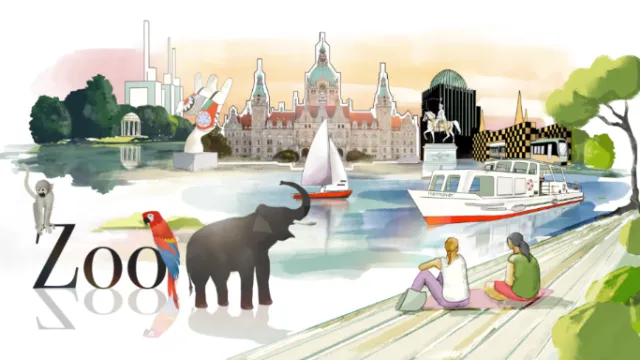
How did you decide to become an illustrator?Stories always need to be accompanied by images with me. As a child, I used to copy The Last Unicorn page by page and invented new adventures while doing so. I would make copies and give them away. Later I was convinced: writing books was my path—so I studied creative writing. Today I know: that wasn’t the whole path, but it was very useful, for example in screenwriting. Only with illustration and film did everything come together—and now I simply create my own stories.Did you study illustration?Not directly. I taught myself most of illustration and animation—through curiosity, perseverance, and lots of backups. I studied graphic design later on, as a second-chance education, while my children were small. In an open studio I worked with acrylics, ink, and watercolor, later I took a private program with an illustrator and various courses. Especially in animation it was a lot of learning by doing—and when I got stuck, my network helped.Which techniques do you work with?I mainly work digitally with Adobe Illustrator and After Effects. Depending on the project, I also use real media like ink or watercolor to create textures by hand. I then digitize them and integrate them into my films—this gives the projects a touch of “handmade” character.Where did you grow up?I was born in Wuppertal. At age five I moved with my parents and siblings to Hanover—and that’s where I stayed, apart from a short stopover by the Rhine.Do you have a childhood memory related to drawing/art that’s important to you?As a teenager I was so dissatisfied with my drawings that I put them aside completely for years. But the desire to work creatively never left me. Later, in the studio, I started again and kept going until the blockages disappeared. Since then, the question of where my limits are has been driving me—so far, I haven’t found any.Where do you live now, and what brought you there?I live in Neustadt near Hanover. Back then I actually wanted to get out into the big wide world—my first training in the hotel business took me to the Rhine and almost to France. In the end I returned because of my later husband. I’ve never regretted it for a second.Do you have a pet in your studio?Our Elo dog “Bosse” is always nearby. Elos look a bit like Border Collies and are wonderful family dogs.Describe the view from your window.Garden, terrace, pony pastures. And always new episodes: runaway turkeys, a fox stealing shoes, hedgehogs on their nightly tour, deer with wide eyes, and a coypu that moved in here as if it had a booking. Not really an idyll—more like an open-air sitcom with a constantly changing cast.Who or what is your greatest inspiration?David Hockney inspires me. In his seventies he started drawing on the iPad. He shows that technology can expand creativity. I’m especially impressed by his view of light and nature, how he reinterprets seasons and landscapes again and again. His spirit of exploration motivates me to stay curious myself and to combine old and new techniques. That’s exactly how I see AI—not as a replacement, but as a tool that opens new creative possibilities.Do you collect anything?I love tea and have a weakness for collecting teacups. Luckily, I hold myself back—otherwise I’d probably have invested a small fortune in it already.What are your interests outside of illustration?Outside illustration I love spending time with my family. Shared laughter, cooking, or little everyday moments mean a lot to me. In the mornings I like going into the woods with the dog—we walk about four kilometers. And when it comes to music, I enjoy big concerts with lots of energy in the audience. Otherwise, I like photography.What makes for a good client briefing?A good briefing is like a clear map: the goal, the message, and the target group have to be included or worked out together. The rest can remain open. I don’t need 30 pages of text, just a few clear details—and then trust in my creativity. I develop the direction together with my clients so the result is not only creative but also the perfect fit.Who is your favorite artist?My favorite artist is Claude Monet. During my apprenticeship I spent my trainee salary on an expensive art print—Gardner’s House at Antibes (1888). For me it was something special. The light and the colors—fantastic! It hung in my bedroom for many years—until it eventually faded.Who is your favorite musician?Definitely U2! They tackle subjects others often avoid. Their concerts are pure energy. Bono once said their shows were like a chemistry kit—and that’s exactly how I feel: like a special reaction between band and audience.If you weren’t an illustrator, what would you be?Then I’d probably be a psychologist with my own practice. I’ve been interested in that for a long time, and I use my knowledge of neuromarketing in animation projects today—to understand how images and stories work in the brain.What’s the best advice you’ve ever received?Listen before you draw.If you could visit any place in the world, where would you go?Definitely Pixar in Emeryville, California—I just want to see how they bring their worlds to life. And I’d probably spend hours wandering through the studios like a child, full of wonder and with a thousand new ideas in my head.Which personality would you like to meet?I’d like to meet George Lucas. Where others see boundaries, he builds solutions. When the effects for Star Wars were missing, he founded ILM. For better film sound, he invented THX. And when digital cameras were still futuristic, he had them developed. Instead of accepting limitations, he created new standards for the whole industry.If you could travel back in time, which era would you choose?I’d travel back to the 1980s to experience the Live Aid concert in 1985—a global benefit event against famine in Ethiopia. U2 weren’t yet the superstars they later became, but their performance was outstanding. Roger Taylor from Queen later said they simply wanted to be better than U2—and that turned into one of the most legendary moments in music history.Do you have any hidden talents?Maybe cooking is my hidden talent. I can be just as creative as in drawing—only you can eat the result.If you could live anywhere, where would it be?A small coastal town would be ideal—with the risk that my productivity might sink into the waves. I can stare at the water for hours.Which themes or subjects in the world inspire you?I’m most inspired by people—and the question of how their brains work. I find neuromarketing fascinating: Why do certain images stick, why do colors trigger emotions, why are stories easier to remember than numbers? Then there are everyday moments, humor, nature, and cultural diversity—everything that moves us on a deeper level.Which film could you watch over and over again?There are many. Star Wars, for example, or The Lord of the Rings. But I don’t just watch films for entertainment—I always pay attention to how great filmmakers work: how they use camera angles, build suspense, or condense a plot. Each time I can learn something new—even on the tenth viewing.Do you have a favorite game?I rarely play board games, because I almost always lose. Over time, that just gets frustrating. If I play, it’s usually action games with historical settings on the PlayStation. I’m fascinated when game worlds make history come alive—it’s almost like interactive storytelling.What do you listen to while working?When I listen to music, it’s rarely in German—especially not when I’m writing texts or scripts. I can tune out English lyrics more easily, so they don’t interfere. That way I stay focused and still in the flow.